Golf Cart Enclosures and Covers: How to Measure, What to Buy, and Protecting a Lithium Cart in Storage
CartVoltage is reader-supported. If you buy through links on this page we may earn a commission at no extra cost to you. As an Amazon Associate we earn from qualifying purchases. Details
An enclosure is the accessory that gets bought by seat count and returned by roof length. “4-passenger” tells you nothing about whether the thing will reach the rear edge of your roof, and a cover that is six inches short lets rain run straight down the back seat. This guide gives the one measurement that matters, explains the difference between a driving enclosure and a storage cover, shows what separates a good one from a cheap one, and adds the step enclosure guides leave out: what to do with the battery under the cover when the cart sits for weeks.
Step 1: Measure the Roof
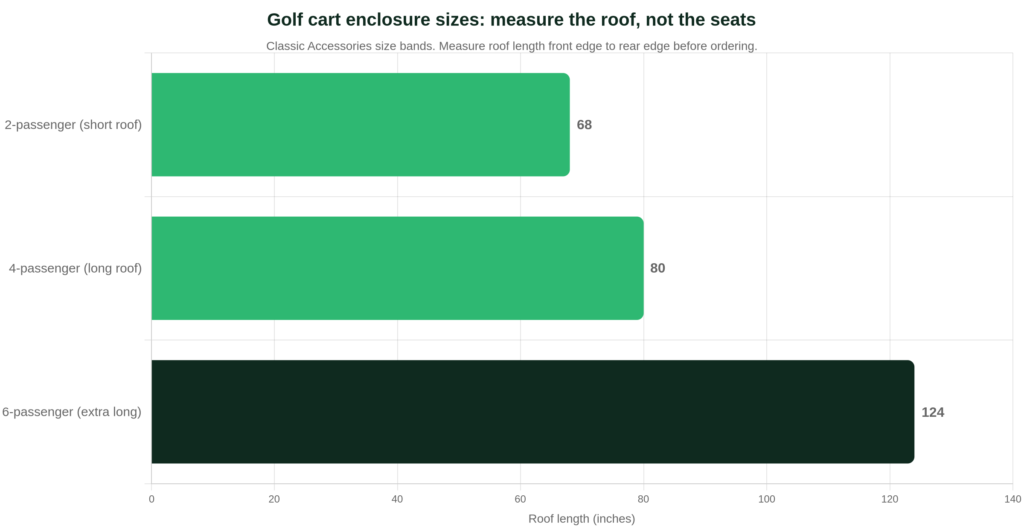
Run a tape along the top of the roof from the front edge to the rear edge, over the curve. That number, not the number of seats, picks the enclosure. A stock 2-seat EZGO TXT or Club Car DS roof is about 54 to 58 inches; a factory “long” roof fitted for a rear-facing seat is about 80 inches; a stretched six-seater is longer still. Two traps: a 2-seat cart with a rear seat kit added later often still has the short roof, so a 4-passenger enclosure will hang loose and flap; and a cart with an extended roof but no rear seat needs the long size regardless of how many people ride.
Also note the roof type. Enclosures assume a standard flat or slightly curved roof with support struts; carts with aftermarket canopies, light bars above the roof or lifted roofs may need the next size up or a universal model.
Driving Enclosure vs Storage Cover
| Driving enclosure | Storage cover | |
|---|---|---|
| Purpose | Keep riders dry and warm while driving | Keep a parked cart clean and dry |
| Windows | Clear vinyl on all four sides, roll-up or zip-open doors | None; solid fabric |
| Fit | Hangs from the roof, hooks or straps under the body | Drapes over the whole cart, elastic hem and wind straps |
| Fabric | Polyester or nylon with a coated back; vinyl windows | 600D polyester with PVC coating is the standard |
| Typical price | $150 to $350 | $40 to $120 |
| Not ideal if | The cart never drives in rain or cold; you only want weather protection while parked | You need to drive in weather; you want a cover that stays on in high wind without straps |
Many owners end up with both: the enclosure for winter driving, the cover for the months the cart sits. A driving enclosure can be used as a storage cover in a pinch, but its clear windows are the first thing the sun ruins, so it is not the right thing to leave on for a season.
What Separates a Good Enclosure From a Cheap One
- Window vinyl that stays clear. Thin vinyl yellows and cracks within a season of sun. Look for “super-clear” or marine-grade window material and store the enclosure rolled, never folded across the windows.
- Zippers you can work from inside and out. Double pulls on the doors matter more than any other feature on a cold morning.
- A rear panel that zips open. For the bag well or the rear seat without taking the enclosure off.
- Fabric that will not shrink or stretch and a coated back; Classic Accessories states this for its travel enclosures.
- Reflective piping if you drive at dusk.
- A storage bag. An enclosure stuffed under the seat is an enclosure with scratched windows by spring.
Our Picks
1. Classic Accessories Deluxe 4-Sided Enclosure: Best Driving Enclosure
The reference enclosure, sold in short roof (up to 68 inches), long roof (up to 80 inches) and extra long (up to 124 inches) sizes, with six zip-open panels, clear windows and a tool-free fit over the roof. It costs more than the generic kits, and owner reviews describe it as a two-person job to fit the first time, but it is the one that still looks right after three winters. Around $350 for the long roof size.
2. 600D Driving Enclosure With Roll-Up Doors: Best Value
Generic 600D polyester enclosures with a PVC coating, a clear front panel, four roll-up doors and wind hooks sell for a fraction of the branded price and fit roofs up to about 94 inches in the 4-passenger size, by VEVOR’s listing. The vinyl is thinner and the zippers lighter; treat them gently and store them rolled.
3. 600D Storage Cover With Wind Straps: Best for a Parked Cart
For a cart that sits in a driveway or under a carport, a full storage cover with an elastic hem, buckle straps under the body and a vent flap (which stops the cover ballooning in wind and lets moisture out) does the job for well under $100. Buy by roof length and overall length, and prefer a cover with a soft inner lining if the cart is painted rather than molded plastic.
Fitting It So It Lasts
- Fit it warm. Vinyl windows are stiff below about 50°F and crease if forced; do the first fit on a mild day or after the enclosure has been indoors.
- Pad the roof edge corners with foam tape where the fabric bears; that is where enclosures wear through.
- Tension the under-body hooks evenly so no single panel takes the wind load, and recheck after the first drive.
- Leave a vent open in storage. A sealed cover traps moisture, which corrodes terminals and mildews seats.
- Wash with mild soap, never a pressure washer on the windows, and store rolled in its bag.
The Battery Under the Cover
A covered cart is usually a parked cart, and the battery, not the fabric, is what decides whether it starts in spring. For lead-acid: charge fully, water to the correct level, and keep it on a maintenance charger or charge monthly, because a partly discharged flooded battery can freeze near 16°F (watering guide). For lithium: charge to roughly 50 to 80%, switch the pack off or disconnect the main negative so the reducer and any accessories cannot drain it, and do not charge it below freezing when you bring it back (winter storage guide, cold weather and lithium). A cover keeps the water off; it does not keep the pack alive.
Frequently Asked Questions
How do I know what size golf cart enclosure to buy?
Measure the roof from front edge to rear edge. Up to about 68 inches is the 2-passenger size, up to 80 inches the 4-passenger size, and up to 124 inches the 6-passenger size.
Can I drive with a golf cart enclosure on?
Yes, that is what a driving enclosure is for; keep it fully hooked down and the doors zipped at speed. A storage cover is not made for driving.
Will a cover stop my battery from draining in storage?
No. Standby loads and self-discharge continue under a cover. Charge, then switch off or disconnect the pack, and follow the storage rules for your chemistry.
Why do enclosure windows turn yellow?
UV and heat break down thin vinyl. Buy marine-grade clear windows, keep the enclosure off the cart in summer, and store it rolled in the shade.